Hiking Shoes vs Casual Shoes | Structural Differences
Hiking Shoes vs Casual Shoes: Key Structural Differences You Must Know
Hiking Shoes vs Casual Shoes: Key Structural Differences You Must Know
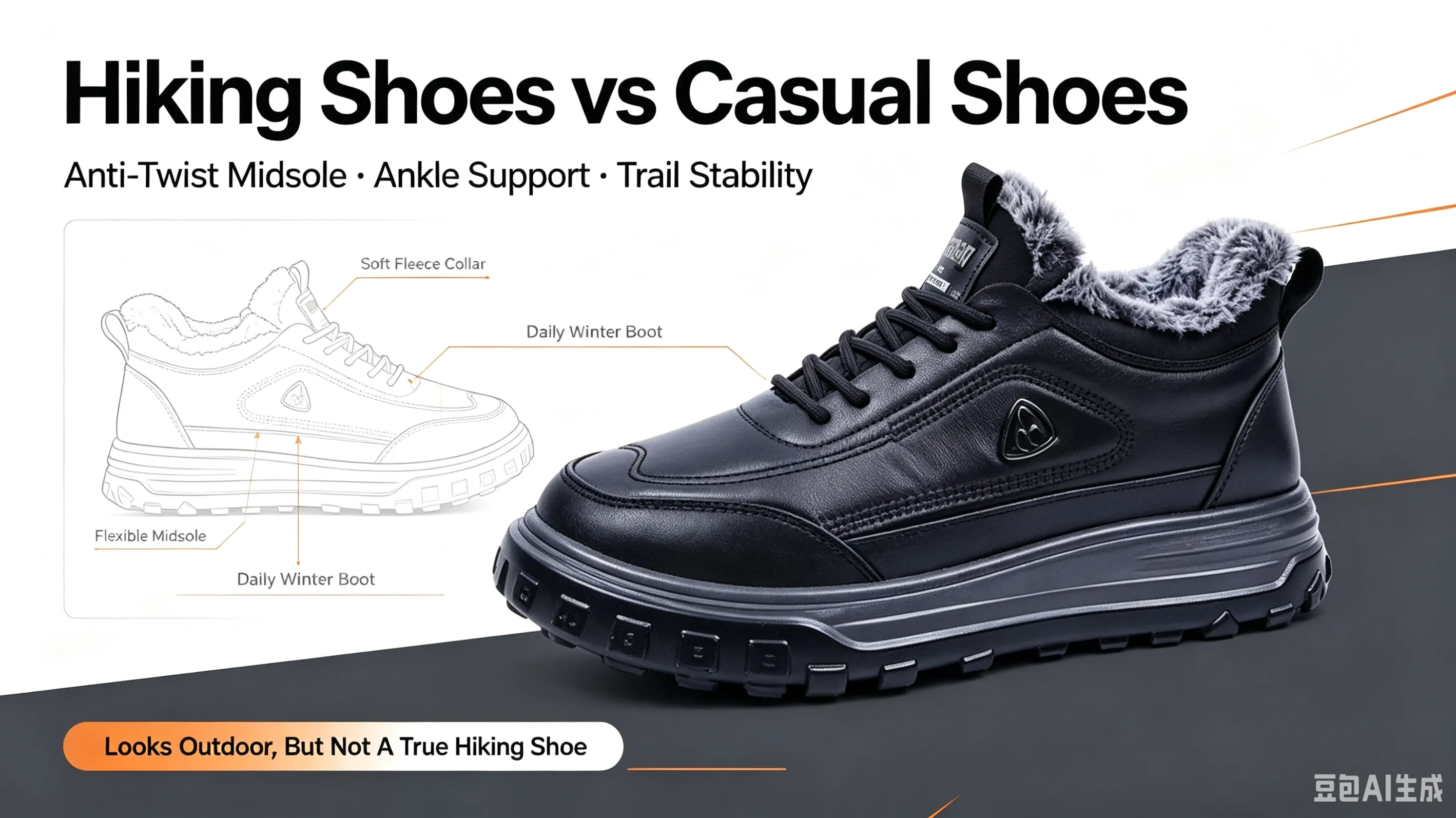
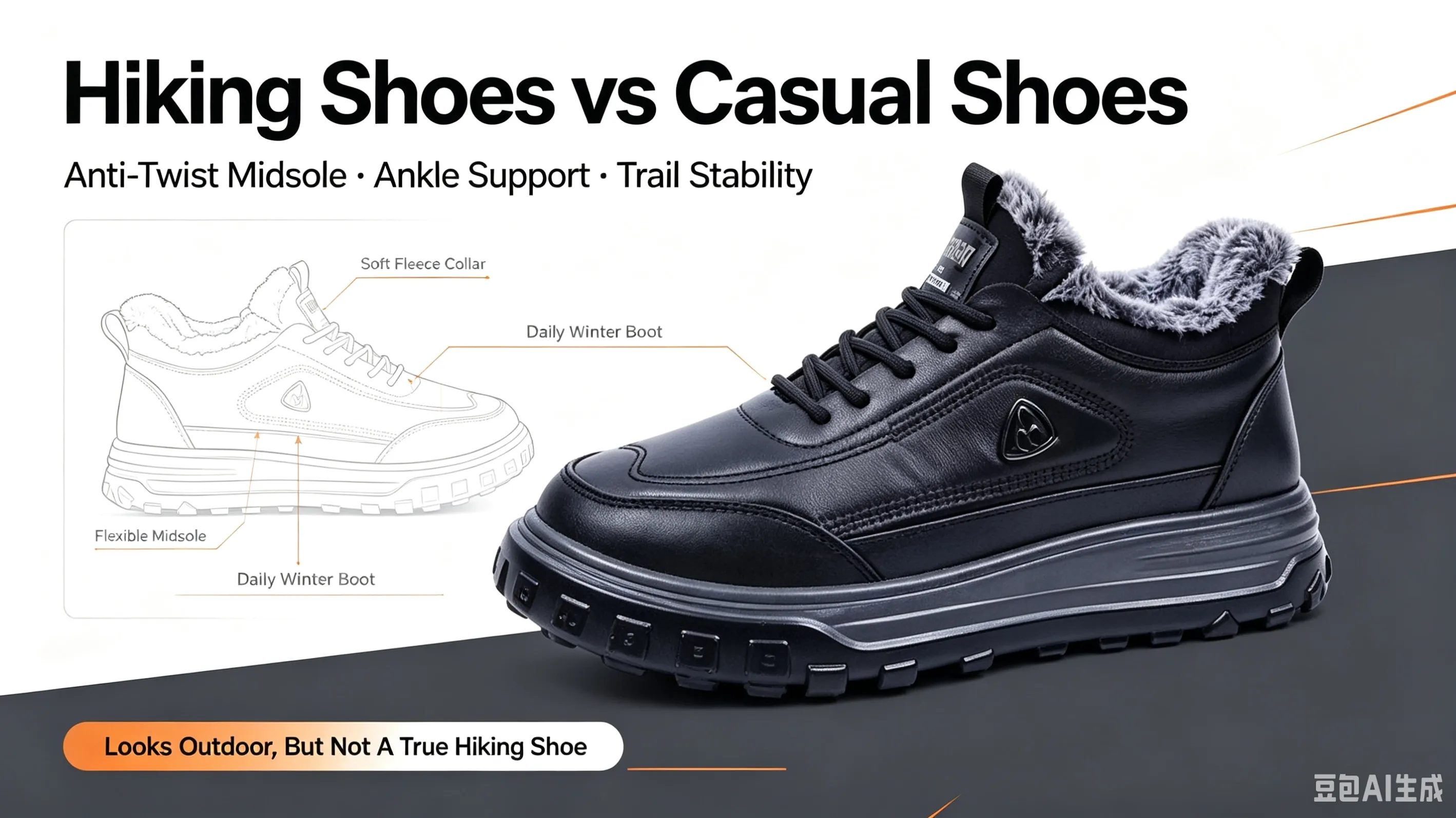
Many buyers confuse outdoor winter boots, casual sneakers, and genuine hiking shoes because they look similar with deep lug soles. However, real hiking shoes are structurally built for uneven trails, rocky ground, and anti-twist stability, not only for warmth or daily walking.
This guide explains the core professional features that define standard hiking footwear, and how to tell them apart from ordinary casual shoes and winter boots.
What Exactly Are Hiking Shoes?
Hiking shoes are professional trail footwear designed for outdoor, off-road terrain. Unlike casual shoes that prioritize softness and comfort, hiking shoes prioritize stability, torsion resistance, ankle support, and trail grip.
Hiking shoes include two mainstream types:
Low-cut Hiking Shoes: Ankle-low design, flexible for fast hiking, still with professional anti-twist midsole
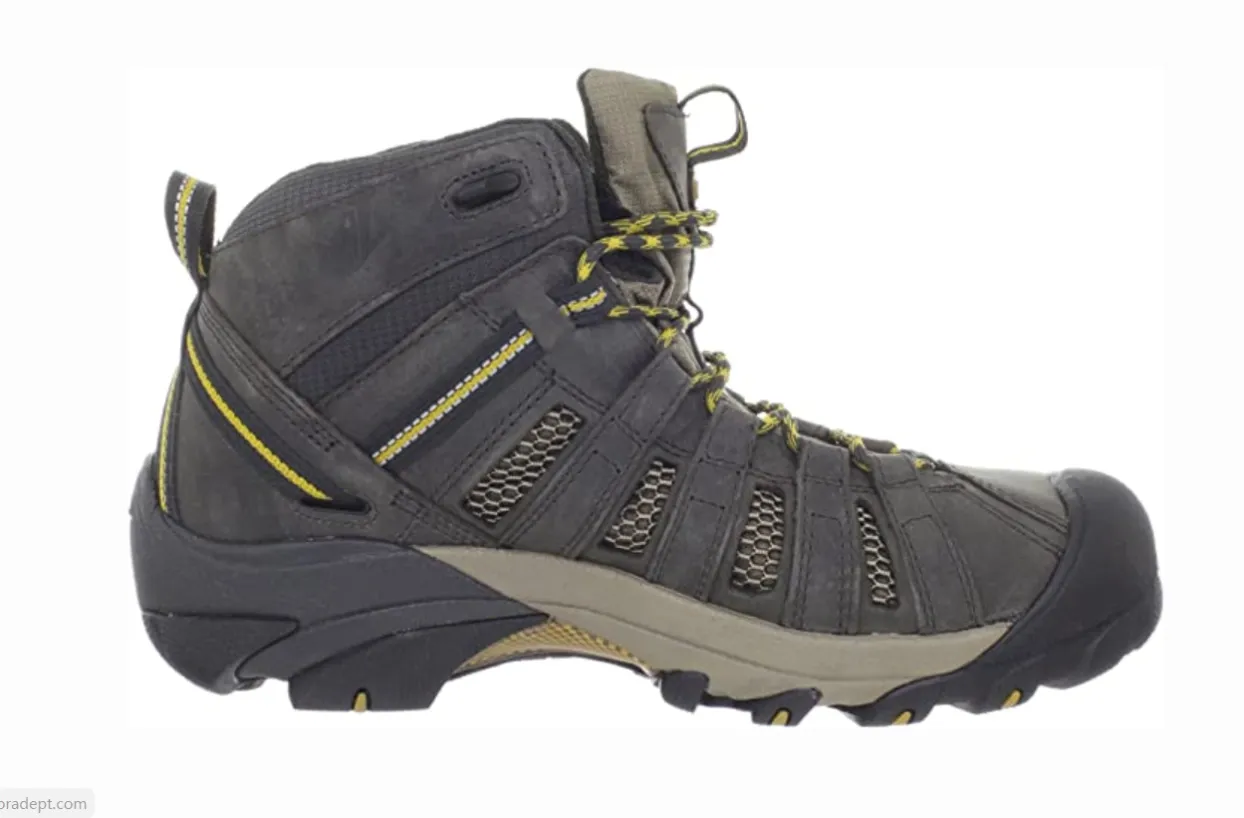
Mid-cut Hiking Boots: Ankle-high design, enhanced lateral support for rocky and rugged trails
Warmth is optional. Many standard hiking shoes are non-insulated, because trail stability is the core function, not winter warmth.
Core Professional Hiking Shoe Structures (Must-Know)
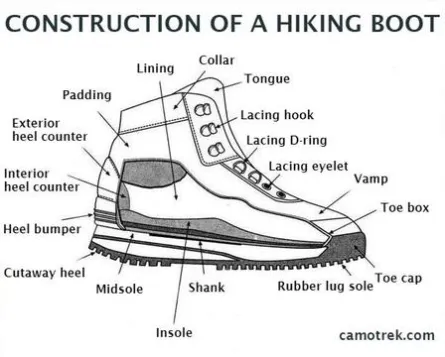
1. Torsion Shank (Anti-Twist Midsole Plate)
This is the most critical difference between hiking shoes and ordinary shoes.
Genuine hiking shoes have a built-in nylon or TPU rigid shank inside the midsole arch area. It acts as a rigid skeleton to lock the sole structure. Function:
Prevent the sole from twisting and deforming when stepping on uneven stones
Avoid foot rollover and ankle sprains on rough trails
Disperse foot pressure for long-distance walking
Simple Test: Hold the toe and heel and twist hard. Real hiking shoes are very stiff and hard to twist; casual winter boots and sneakers twist easily.
2. Firm Heel Counter (Rear Foot Lock Support)
Authentic hiking shoes adopt a hard wrapped heel counter. The rear part is thick and rigid, not soft foam.
Function: Lock the heel firmly, prevent sliding inside the shoe, and avoid lateral rollover when walking on slopes. Fake outdoor shoes / winter boots: The heel is soft and squeezable, with no fixed support structure.
3. High-Density Ankle Collar Support
Ankle support does not depend only on shoe height.
Professional mid-cut hiking boots use high-density hard foam collars around the ankle. The structure is sturdy and resistant to compression. Function: Provide lateral resistance to protect the ankle from spraining on uneven terrain. Ordinary ankle winter boots: filled with soft fleece only, warm but no supporting force, easy to collapse under pressure.
4. Reinforced Upper + Deep Lug Anti-Slip Outsole
Upper: Wear-resistant and scratch-resistant material, effectively resisting rock friction and branch impact
Outsole: Hard rubber with deep, thick lugs, designed for mud, gravel, and slippery trail surfaces
Hiking Shoes VS Casual Winter Boots / Sneakers (Full Comparison)
Feature
Genuine Hiking Shoes
Casual Winter Boots / Sneakers
Internal Structure
Built-in torsion shank, rigid midsole
Pure foam midsole, no anti-twist parts
Heel Structure
Hard fixed heel counter
Soft deformable heel
Ankle Support
High-density supportive collar
Soft fleece / ordinary sponge, no support
Sole Twist Feeling
Stiff, difficult to twist
Soft, easy to bend and twist
Core Purpose
Outdoor trail stability & protection
Daily comfort, warmth, city walking
Applicable Scene
Mountains, trails, gravel, uneven roads
Street, community, flat pavement, daily casual
Quick Judgment Rules for Product Classification
For store category accuracy, follow this standard:
Belong to Hiking Shoes category: With torsion shank + hard heel + supportive collar, professional trail-oriented structure
Belong to Boots / Casual Shoes category: Deep lug sole but no anti-twist structure, soft body, core selling point is warmth or daily comfort
Conclusion
Hiking shoes are defined by internal professional support structure, not by appearance or shoe height. Many winter boots look like outdoor shoes with deep treads, but they lack torsion resistance and ankle protection, so they are casual daily footwear, not genuine hiking shoes.
Choosing structurally qualified hiking shoes ensures safer, more stable, and more comfortable outdoor hiking experiences on rugged terrain.
Read next
More from the journal
Keep readers moving through related announcements, stories, and field notes.
Want to cooperate with Chinese shoe manufacturers? Learn practical sourcing rules, factory vetting, sample making, MOQ negotiation and quality‑control tips for footwear importers.